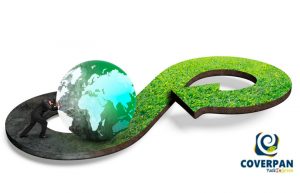

In the packaging and food sector, sustainability is no longer just an option; it is a roadmap with very clear rules. The European Union has launched a new European Packaging Regulation designed to reduce waste and promote recycling.
We know regulatory texts can be confusing, so at COVERPAN we have summarized the key points you need to know so your business is prepared and complies with the law hassle-free.
Who is the "Manufacturer" under the law?
One of the most important points is knowing who holds legal responsibility for complying with these regulations:
If you sell under your own brand: If you order packaging with your brand’s design and specifications (for example, for your food products), in the eyes of the law, the “legal manufacturer” is you.
Micro-enterprise exception: If your company has fewer than 10 employees and an annual turnover of less than 2 million euros (and we are in the same country), the legal responsibility for labeling and sustainability falls on us as your packaging supplier.
Goodbye to PFAS substances (As of August 12, 2026)
Starting August 2026, it will be prohibited to market food-contact packaging that exceeds the limits for PFAS (a group of persistent chemical substances).
Watch out for stock: The law will not grant a grace period to exhaust old inventory after that date; every package on the market must comply with these limits from day one.
Mandatory Recyclability: All packaging must be recyclable
As of August 12, 2026, all EU packaging must be recyclable.
Phase 1 (2026): We will prove recyclability using current standards in force (such as EN 13430).
Phase 2 (As of 2028): The European Commission will define unified “Design for Recycling” (DfR) criteria, and we will have a 24-month period to fully adapt to that new guide.
Paper packaging with plastic? Important exemptions
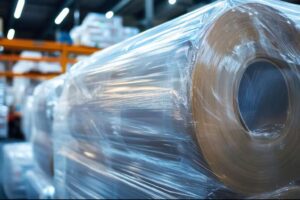
Many flexible packaging items are composite (a combination of paper and plastic).
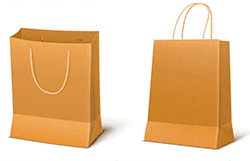
If we manufacture packaging primarily made of paper where plastic accounts for less than 5% of the total weight, that plastic portion is exempt from mandatory recycled content targets. At Coverpan, we take care of justifying and including this data in your packaging’s technical documentation.
Lighter packaging without unnecessary "filler" (2030)
Starting January 1, 2030, the EU will require reducing packaging weight and volume to the minimum functional necessity. Adding extra layers or volume solely for aesthetic or marketing reasons will no longer be allowed.
A new single European Labeling system (August 2028)
To help consumers recycle correctly, starting August 2028 it will be mandatory to unify labels across the EU using harmonized pictograms. Specific national recycling labels will be eliminated to create a single universal system across the entire European market.
Compostable Packaging: When and how can it be used?
The Regulation permits and supports compostable packaging as a legal alternative to traditional mechanical recycling:
Mandatory formats: Formats such as very lightweight plastic carrier bags or coffee/tea capsules and single-serve pods must be industrially compostable before February 2028.
Home Compost: The EU is creating a single European standard to certify home composting, providing complete legal assurance for these materials.
What does this mean for you as a Coverpan customer?
In practice, your packaging solutions must focus clearly on one of these two paths:
100% Mechanically recyclable (paper packaging or mono-material plastics that are easy to sort).
100% Certified compostable (under standard EN 13432).
Hybrid or complex designs that complicate both paths will gradually disappear from the market.
At Coverpan, we are already working in alignment with the European timeline to ensure that all packaging we supply strictly complies with the law, guaranteeing maximum quality, functionality, and sustainability for your products.
Do you have questions about the materials of your current packaging? Get in touch with our technical team and we will advise you without obligation!